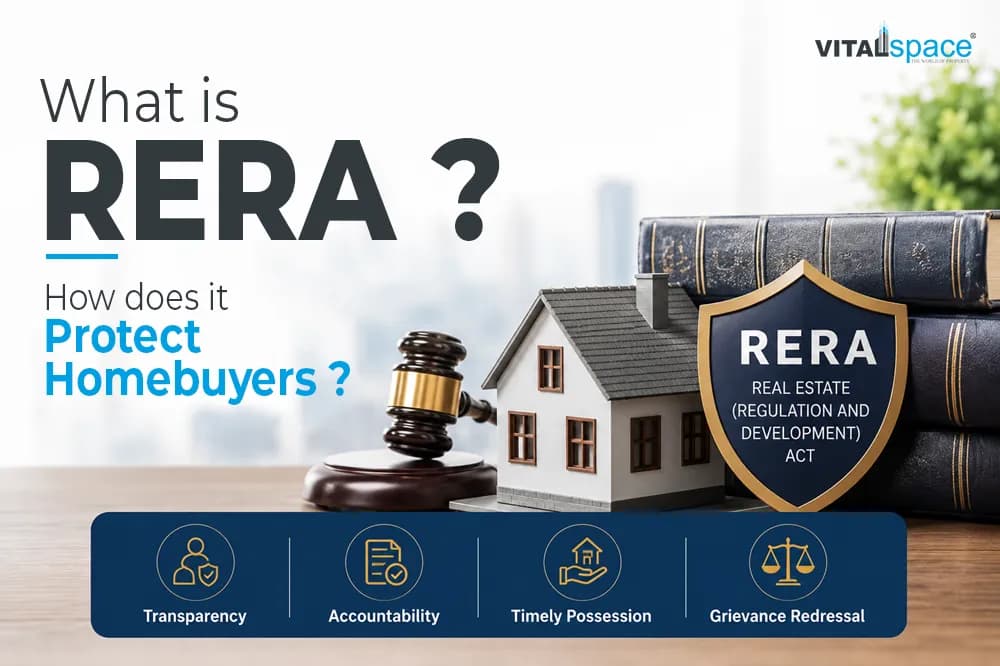
RERA (Real Estate Regulation and Development Act, 2016) is an Indian law that regulates the real estate sector and protects homebuyers by improving transparency, accountability, and financial discipline in real estate projects.
RERA requires eligible projects and real estate agents to register with the respective state RERA authority and provides homebuyers with important rights and remedies related to project information, delays, possession, and disputes.
What is RERA?
RERA (Real Estate Regulation and Development Act, 2016) is a government law in India that regulates the real estate sector. It applies to most residential and commercial real estate projects, giving buyers greater confidence while purchasing property in Ahmedabad or any other city and encouraging developers to follow legal and financial standards.
Its main goal is to bring accountability, transparency, and fairness in property transactions, helping buyers make informed decisions when investing in apartments in Ahmedabad or other RERA-registered projects.
Which Projects Need RERA Registration?
Under RERA, real estate projects generally need to be registered with the applicable state RERA authority before they are advertised, marketed, booked, or sold. The Act provides exemptions for certain smaller projects and other specified categories.
A project generally falls under the registration requirement when the land proposed to be developed exceeds 500 square metres or the number of apartments proposed to be developed exceeds 8 apartments, including all phases. The appropriate government may reduce these thresholds where considered necessary. Buyers should verify the project's registration status with the relevant RERA authority.
Projects that received a completion certificate before the commencement of RERA, as well as certain renovation or redevelopment projects that do not involve new marketing, advertising, selling, or allotment, may fall under exemptions provided by the Act.
How Does RERA Work?
RERA works as a regulatory system that controls RERA-registered projects in India through strict rules, financial accountability, and transparency. If you're planning to buy a flat in Ahmedabad, understanding this process can help you make a safer investment.
1. The builder must register the project under the state RERA authority
2. After registration, a unique RERA registration number is issued
3. All project details must be uploaded on the official RERA portal
4. Builders/promoters must register a project with the applicable RERA authority before advertising, marketing, booking, or selling a project that requires registration.
5. 70% of the amounts realised from buyers must be deposited in a separate bank account and used for land and construction costs of that project, subject to the conditions prescribed under RERA.
6. Promoters must follow the sanctioned plans and declared project timelines, subject to the provisions of RERA.
7. Buyers can track project status and file complaints online if needed
RERA Rules Every Homebuyer Should Know
Before buying a property, homebuyers should understand the key RERA rules that apply to registered projects:
Project registration: Projects that require registration must be registered with the applicable RERA authority before advertising, marketing, booking, or selling.
Separate bank account: Promoters must deposit 70% of the amounts realised from allottees from time to time into a separate account for the land and construction costs of that project, subject to the provisions of the Act.
Project disclosures: Promoters are required to provide prescribed project and promoter information to the RERA authority and keep required details updated.
Carpet area: Property advertisements and sale information should use the RERA definition of carpet area rather than relying on misleading area measurements.
Advance payment: A promoter cannot accept more than 10% of the apartment, plot, or building cost as an advance or application fee without first entering into a written agreement for sale.
Changes to sanctioned plans: Promoters cannot make major changes to sanctioned plans or project specifications without the consent required under RERA.
Defect liability: Certain structural defects and specified defects in workmanship, quality, provision of services, or other obligations are covered by the promoter's liability under RERA.
Real estate agent registration: Real estate agents dealing in projects covered by RERA registration requirements must also comply with the applicable registration requirements.
Before vs After RERA
| Before RERA | After RERA |
| No strict regulation in real estate sector | Real estate is strictly regulated under law |
| Project timelines and delay-related buyer remedies are regulated. | Timely project delivery is enforced |
| No control over builder funds | 70% of buyer amounts deposited in a separate project account |
| Misleading advertisements were common | All project details must be transparent |
| No standard definition of carpet area | Only RERA carpet area is allowed |
Benefits of RERA
RERA provides multiple benefits for homebuyers, builders, and real estate agents by making the property market more transparent and regulated. It also helps buyers identify verified property listings and gives homebuyers in Ahmedabad greater confidence while investing in real estate.
For Homebuyers
* Protection from project delays and fraud
* Clear information about project details
* Legal rights to claim compensation for delays
* Standardized carpet area for accurate pricing
For Builders
* Improved trust and credibility in the market
* Structured project approval system
* Better financial discipline through escrow accounts
* Reduced legal disputes due to clear rules
For Real Estate Agents
* Mandatory registration ensures professionalism
* Increased trust from buyers and developers
* Regulated commission and practices
RERA in Gujarat (GUJRERA)
In Gujarat, RERA is implemented through the Gujarat Real Estate Regulatory Authority (GUJRERA). It regulates all residential and commercial real estate projects across the state.
All builders in Ahmedabad, Gandhinagar, and other parts of Gujarat must register their projects under GUJRERA before advertising or selling them.
This is especially beneficial for buyers exploring luxury flats in Ahmedabad or other residential projects in Ahmedabad, as they can verify project approvals, construction progress, and possession timelines before making a purchase.
Why GUJRERA is Important
* Ensures transparency in Gujarat real estate market
* Helps buyers verify legal status of projects
* Prevents fraud and illegal construction
* Provides online complaint filing system
RERA Projects in Ahmedabad & Gandhinagar
All registered projects in Ahmedabad and Gandhinagar can be checked on the GUJRERA website. This helps buyers make safe and verified property decisions.
Conclusion
Understanding What is RERA is very important for anyone investing in Indian real estate. The RERA Act, 2016 was introduced to bring transparency, accountability, and trust in the property market and to protect homebuyers from fraud, project delays, and misleading practices.
With strict rules like mandatory project registration, escrow account for funds, and penalty for delays, RERA has significantly improved the real estate sector in India. It ensures that buyers get fair pricing, clear information, and timely possession of their property.
For buyers in Gujarat, the GUJRERA system provides additional transparency by allowing verification of all registered projects in Ahmedabad, Gandhinagar, and other cities.
If you're planning to invest in property in Ahmedabad, always verify the project's RERA registration before making any payment. You can also explore Flats for Sale in Ahmedabad, 2 BHK Flats in Ahmedabad, and Resale Flats in Ahmedabad to find verified properties that match your budget and requirements.
Frequently Asked Questions (FAQs)
1. What is RERA in simple words?
RERA is a law in India that regulates the real estate sector and protects homebuyers from fraud, delays, and unfair practices.
2. Is RERA mandatory for all projects?
Yes, most residential and commercial projects above a certain size must be registered under RERA before advertising or selling.
3. How does RERA protect homebuyers?
RERA ensures timely project delivery, transparency in pricing, proper use of funds, and legal protection against delays and fraud.
4. What is RERA carpet area?
RERA carpet area is the actual usable area inside a flat, excluding walls, balcony, and common areas.
5. How can I check if a project is RERA approved?
You can verify it on the official state RERA website like GUJRERA for Gujarat projects.
6. What happens if a builder delays possession?
Under RERA, the builder must pay compensation or interest to the buyer for project delays.
7. Is RERA applicable in Gujarat?
Yes, RERA is applicable in Gujarat through GUJRERA authority.